
Abdullah Syahiran Arfan is our
second child & the only our living son. His SPM result (sat in 2011) was just
average. Indeed, he was among the clever pupil during his primary school days.
However, when he was in secondary school & living in a school hostel, he
has changed a little bit. Maybe the school environment contributed to this
change. He is now waiting for pursuing his study in polytechnic & other
skill learning institutions. Hopefully, our only son will get a place in a polytechnic
for his brighter future ahead….
Wednesday, May 9, 2012

Sunday, April 22, 2012
CHILLI

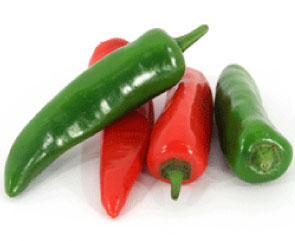

Chilli; Capsicum
The plant is herb/shrub,
up to 2m tall. Its flowers are white with a purple tinge & grouped in the
forks of leaves. The fruits are conical or elliptical. They are orange, red or
yellow at maturity & contain numerous seeds. There
are many species of chillies, ranging from large to small & vary in hotness
from mild to incendiary-like potency. Chewing of chillies may cause a burning
sensation of the tongue & mouth but is normally harmless. For all eye exposures, just rinse
with water for 15 minutes, followed by medical help.
Chilli
can contain as much as six times the amount of vitamin C as a single orange.
They also contain high amounts of the antioxidant beta-carotene, which supports
the cardiovascular system & as well as helps maintain the health of the
eyes & skin, and immune system. Green chillies also contain vitamins B
& E and are a good source of iron & potassium.
The
study by the researchers at the University of Tasmania (published in the
American Journal of Clinical Nutrition, July 2006) reported that the regular
consumption of chillies can help our body control insulin levels (by up to
about 60%).
Health
& Medical Benefits:
1.
Capsaicin
(contains a neuropeptide) – anti-inflammatory agent.
2. Eating chili is
good to sinus congestion, sinus pain & headaches and provides pain relief
for migraines/cluster headaches.
3.
Study (Cancer
Research, March 2006) concluded that capsaicin could stop the spread of
prostate cancer.
4.
A
Berkley neurobiology research reported that capsaicin/chilli consumption to be
‘protective against stomach cancer’.
5.
Eating chilli could also lower the cholesterol
level.
6. Studies have shown
that eating chilli kills 80% of prostrate cancer cells & can even prevent
them forming.
7. Eating chilli can
ease the pain caused by Irritable Bowel Syndrome (IBS), because it contains a
pain-killing neuropeptide.
8. When applied
topically, capsaicin provides pain relief from osteoarthritis & may help
ease pain from diabetic neuropathy.
9. Eating chilli can
prevent blood clotting.
Tuesday, March 20, 2012
My Great Mother (1935-2012)

My great, inspiring & caring mother, Putieh binti Ibrahim has been called by the Al-Mighty Allah at about 5.00 a.m. on 5th March 2012, about 5 months after my father Idris bin Hussain passed away.
I received a phone call from my big brother at about 10.30 p.m. on 4th March, telling that my mother was in dying condition. Due to very heavy sleepiness, I decided to have some sleep then. I set my hp to give an alarm on 2.00 a.m. 5th March. Exactly at 2.00 a.m., I woke up. After telling my beloved wife about the news, we prepared ourselves, leaving for my hometown. We left our home at 3.00 in the morning. On our way, I received 2 sms from my siblings, saying that our beloved mom has passed away at 5.00 a.m. With strong will, I just kept driving to Bukit Kuang so that we could arrive on time. We arrived safely at 8.00 a.m. I rushed then to give a last warm kiss to my late mother. She was in smile looking face. The body of our beloved caring mother was finally laid to rest in peace at Bukit Kuang Muslim cemetery at about 12.30 p.m.
She was so humble & hard working mother. She was also very friendly to her children, friends & neighbours. She always had very wise advice & great vision. She was a very strict mother when it comes to educational & religious matters.
Stay calm over there, mother. We, your children are going to miss you. We will surely remember your wisdom advices. We will be together, no matter what would happen.
Ya Allah, Ya Rahman, Ya Rahim. Please do accept Putieh binti Ibrahim with Your Unlimited Mercy and shower her with Your Utmost Blessings & Forgiveness.
Monday, February 20, 2012
Prophet Muhammad s.a.w.
When the month of Rabiul Awal comes, every Muslim around the globe is busy with the celebration of Maulidur Rasul (birthday of Prophet Muhammad s.a.w.). Every occasion is filled with story telling a life of Prophet, marhaban, berzanji, salawat & some food feast. A special parade for this occasion has also normally been organised.
Not wrong to organise such activities but is it truly enough for us to just remember Prophet Muhammad s.a.w. once in a year while the rest of the year we just forget it? We as the Muslims should remember Prophet Muhammad s.a.w. every second of our life. We also have to practise whatever the teachings brought by him s.a.w. in our daily life. Prophet Muhammad s.a.w. was not only a great leader but he was also a super icon that we should follow.
“And We have not sent you (Muhammad s.a.w.) but as a mercy to the worlds”. [Al-Quran, Al-Anbia 107]
Thursday, February 9, 2012
My 1st Oral Presentation at National Seminar
VOLUME ESTIMATION USING SPECT TECHNIQUE
1Abdullah Waidi Idris, 1Arihasliza Ariffin, 2Ahmad Zakaria
1School of Health Sciences, USM, Kelantan.
2Dept. of Nuclear Medicine, Radiotherapy & Oncology, School of Medical Sciences, USM, Kelantan.
National Seminar on Medical Physics;
27th & 28th August 2005; De Rhu Beach Resort, Kuantan, Pahang
Jointly Organised by: International Islamic University Malaysia
& Malaysian Association of Medical Physics (MAMP)
Abstract
The objective of this study is to estimate the volume of organ of different sizes using the Single Photon Emission Computed Tomography (SPECT) technique. This method was chosen due to the 3-dimensional data imaging compared to the 2-dimensional data planar imaging.
In this study, the acrylic phantom (with various sizes of cylindrical insert of known volume simulating the ‘hot’ lesion) had been used. This phantom was filled with 20 mCi of 99mTc. The data was then acquired using gamma camera and SPECT system using LEHR collimator, 64 x 64 matrix size and 64 views of projection (30 seconds per projection). Subsequently, the acquired data were reconstructed using the filtered back-projection technique: Ramp and Butterworth filter: order = 5, cut-off frequency = 0.35 Nyquist.
The radius of each cylinder was measured and the volumes were calculated by this formula ; V = πr2 Х pixel size Х total number of slice. Then, a regression analysis was made for true and calculated volumes of each cylinder.
The correlation coefficient obtained was 0.988 with a different percentage of less than 20%. As conclusion, this SPECT technique can be applied to estimate a size of any lesion in a clinical study.
Wednesday, February 8, 2012
TEA

Tea; Camellia sinensis
Tea is the most important & a popular non-alcoholic drinks in the world. The word of tea was originated from “kia” in Chinese & then was evolved into "cha" in the 6th century A.D. Then this term became té upon its arrival in the West, which is still been used in many countries (with spelling difference).
Tea plant is usually small with a height of 50-200 cm but cultivated plants are kept pruned to a normal human’s reachable height. Its leaves are glossy green & 5-13 cm in length. Tea plants can yield for about 25-50 years.
Tea is prepared from leaves, leaf buds & tender stalks of different varieties of camellia sinensis. The 4 most important classes (based on types of processing) are:
1. Black tea (leaves - fermented).
2. Green tea (leaves - unfermented, rapidly steamed).
3. Oolong tea (leaves - partially fermented).
4. White tea (the most delicate of all teas. The new leaf buds are plucked, withered slowly at low temperatures).
The caffeine is a natural component of tea leaves. The alkaloids, caffeine & oils give the characteristic flavour of tea.
Health & Medical Benefits:
Tea leaves contain chemical compounds called polyphenols. The caffeine extracted from tea is added to some pain-killer medicines. Tea also has fluoride (which is vital for teeth) & has no calories. Recent research shows that any tea derived from camellia sinensis has cancer-fighting properties.
Polyphenols in tea have been known to:
| |
Besides polyphenols, tea also contains theanine (an amino acid, unique to tea), vitamins [vitamin A, B, C, D, E & K (specifically green tea)], minerals & methylxanthines. These components are vital in:
- fighting against mutagenic agents.
- delaying aging process.
- fighting high blood pressure.
- combating against viral & bacterial infection.
- improving the functions of the digestive & excretory systems.

Subscribe to:
Posts (Atom)